
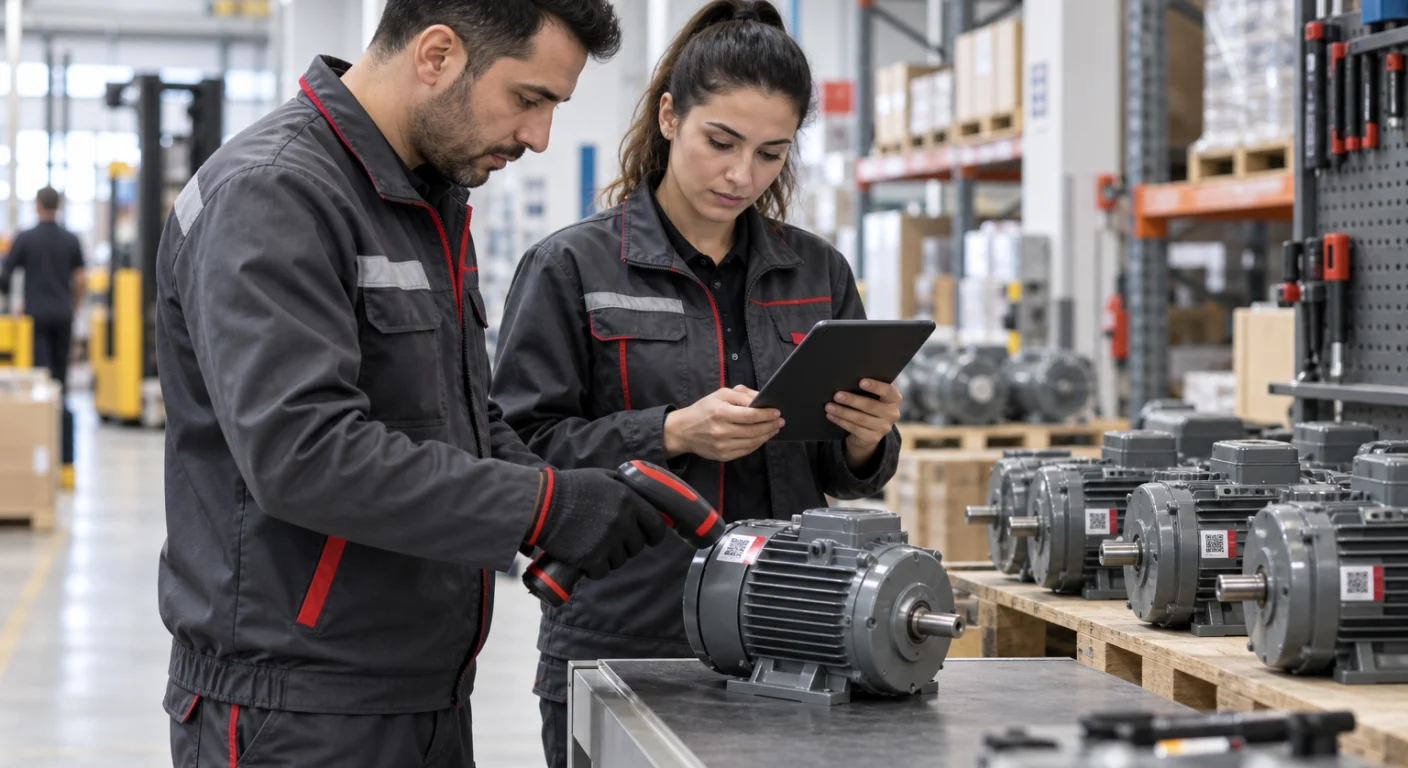
Serial number tracking is a method of tracking each product one by one, from acceptance to sale, from warranty and service to return, by separating physical units with the same product code. While a lot number identifies a group of products, a serial number is merely an identification of a physical product.
What is the Difference Between Serial Number and Lot Number?
| Comparison | serial number | Lot number |
|---|---|---|
| The scope it defines | A single physical product | Product group accepted with the same features |
| Quantity linked to the same number | Usually 1 piece | Multiple pieces, kilograms or meters |
| Basic use | Warranty, service, charge and individual device history | Production batch, quality, end use and recall |
| example | Engine SN-260916-0048 | Paint lot LT-260916-A |
In the GS1 traceability standard, the lot level separates products in the same group, and the serial level separates a single product sample. Which level to use is determined by the risk of the product, service need and desired traceability detail.
Which Products Use Serial Number Tracking?
Tracking each stock item by serial number can create unnecessary recording overhead. Serial tracking makes sense if you need to know the owner, warranty status, technical history or location of the individual product.
machinery and equipment
Engine, pump, bench, measuring device and production equipment.
electronic products
Computer, terminal, phone, printer and network device.
Products being serviced
Products that require maintenance, parts replacement and malfunction history to be kept.
Guaranteed products
Products whose warranty start, duration and customer delivery will be verified.
embezzled assets
Fixtures delivered to employees, branches, dealers or projects.
High risk units
Parts to be monitored on a product-by-product basis for quality results or conformity certificates.
A Product Can Have Both Lot and Serial Number
100 engines prepared under the same production conditions can be attributed to a single production lot; On the other hand, each engine can be given a different serial number. The lot indicates the common raw material and manufacturing condition, while the serial number indicates the life cycle of the specific engine going to the customer.
How the lot structure is linked to raw materials, production orders, and shipments In the guide for batch and lot tracking in production and review it.
How to Set Up Serial Number Tracking?
Identification
The tracking rule is determined by the serial number on the product card; It is clarified that the number will be given by the manufacturer, supplier or business.
Goods acceptance or production
The serial number of each physical unit is scanned or generated by the system and linked to the entry document.
warehouse movement
The warehouse and address where the serial numbered product is located is monitored through transfer, counting and status changes.
Shipping and sales
It is recorded which serial number was delivered to which order, delivery note, invoice and customer.
Warranty and service
Malfunctions, maintenance, replaced parts, service dates and warranty status are tracked through the same product ID.
Return or end of use
It is verified whether the returned product is actually the unit sold; The resale, blockage or scrap decision is recorded.
Where is the Engine with Serial Number SN-260916-0048?
Accept goods
Received in Warehouse A with supplier and purchase invoice.
Shipment
Shipped to customer with order SO-1842.
service acceptance
Brought in for service under warranty due to a vibration complaint.
delivery to customer
The bearing replacement and test result were recorded in the product history.
What Information Should Be Kept with Serial Number in ERP?
Product ID
Stock code, model, variant and unique serial number.
Source
Supplier, purchasing document or production order.
Location
Company, warehouse, shelf, store or service point.
Status
Available, reserved, shipped, in service, blocked or scrap.
Ownership
Customer, dealer, project, employee or machine used.
past
Inbound, transfer, sales, returns, maintenance, part replacement, and warranty movements.
Monitoring cannot be established by simply writing a comment on the serial card. Purchasing, production, warehouse transfer, counting, delivery note, invoice, return and service transactions must be associated with the same serial number. Warehouse address and shipping side KG WMS, serial and lot component relationship used in production KG Palaimon You can evaluate it within the scope of .
Is a barcode the same as a serial number?
It is the unique identity of the product
It may consist of numbers and letters. Separates two physical units within the same product code.
It is a method of reading the ID by machine
It can carry the serial number, product code, and other fields. Scanning the label alone does not provide traceability unless there is correct stock movement behind it.
Common Mistakes in Serial Number Tracking
Reusing the same serial number
When a unique identifier is duplicated, the inventory, customer and service histories of two physical products become mixed.
Write the serial number only on the invoice
If there is no serial record in goods acceptance, warehouse and transfer movements, the pre-sale history of the product cannot be found.
Not matching the tag with the record
If the code on the product and the series selected in the system are different, scanning the barcode will only produce the error faster.
Not performing serial verification on return
There is a risk that the customer will return another product or that the unit will be processed out of warranty.
Using series and lot interchangeably
Giving a serial number to a single quantity line does not provide individual item tracking; Each physical unit must be defined separately.
Delete past serial movement
Unless the correction is made with a new and explained process, the audit trail and the actual movement sequence of the product are lost.
Frequently Asked Questions
Does the serial number have to be unique?
Within the scope of tracking, the same product-batch combination must be unique. If there is a possibility that different suppliers will use the same number, an internal serial ID of the business can be created.
Why should the quantity be one for a serial numbered product?
The serial number represents a single physical product. If more than one product is kept under the same series, it cannot be distinguished which unit was sold, returned or came for service.
Is the supplier serial number available?
Available. The number must be received unchanged and without errors, matched with the product card and checked for duplication of the same number.
Can old products without serial numbers be entered into the system?
Internal serial number can be generated in a controlled manner during counting or transition work. Opening location, current customer or charge, and known service history should also be recorded.
Determine the Traceability Level According to the Needs of the Product
GS1 Global Traceability Standard defines product type, lot, and individual serial levels separately. Microsoft's inventory tracking explanations also show that past movements can be searched through tracking dimensions such as serial or batch along with the product number.
Sectoral legislation, customer requirements, warranty and quality records that your business is subject to should also be evaluated with relevant experts.
To preserve the serial number throughout product movements in stock tracking guide You can also review the input-output and document links.
Track serial-numbered products along with warehouse, customer and service records
Acceptance, address, transfer, shipment and return processes of stocks with serial and lot numbers KG WMS Check out how you can manage it with.