
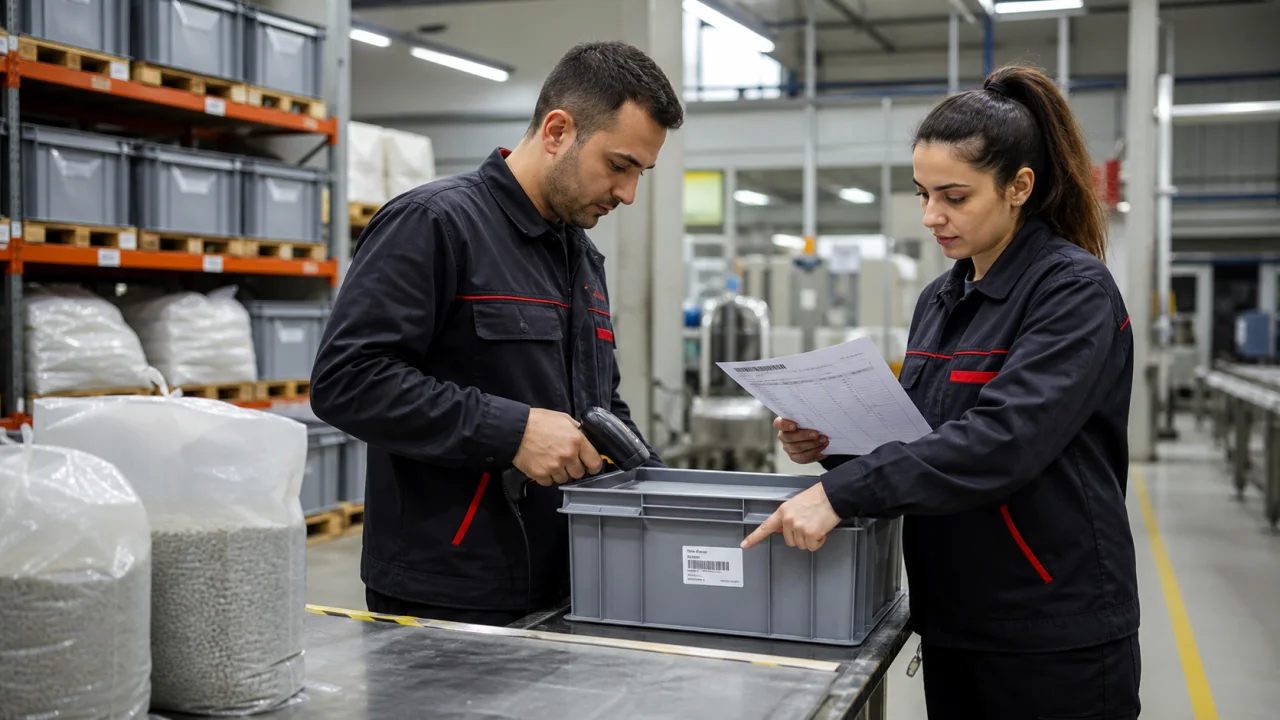
Party and lot tracking; It records with which raw materials, in which production order and through which processes a product was produced. The aim is not just to stick a label on the box, but to establish an unbreakable record chain from raw material to the customer.
Batch, Lot and Serial Number Are Not the Same Thing
Production group processed together
It refers to the quantity produced together under the same production order, date, bill of materials or process conditions.
Traceable stock group
It is a group of materials or products that are considered to have the same properties and resources and are tracked with separate quantity and movement records.
ID for a single product
It distinguishes each unit from the others in machines, devices or products that require warranty tracking.
The terms batch and lot may be used interchangeably depending on the industry or company standard. The important thing is that the definition of the business and the numbering rule are applied the same in all warehouse and production operations.
If it is necessary to track each physical product separately during warranty, service and return processes serial number tracking guide and examine it.
How to Set Up Lot and Lot Tracking in 6 Steps?
The following records are not just independent cards. The lot ID formed in one stage should be the source of the movement in the next stage.
Accept goods
Data to be recorded: Supplier batch or lot, internal lot number, date of receipt, quantity, supplier and quality status.
Placement in storage
Data to be recorded: Internal lot number, warehouse and shelf address, remaining quantity, expiry date or check date.
spent on production
Data to be recorded: Production order, raw material lot used, consumption amount, transaction date and relevant operation.
Production and subcontracting process
Data to be recorded: Machine or line, operation, subcontractor, processing result, re‑work and waste information.
Finished goods and quality control
Data to be recorded: The resulting product lot, connected production order, test result, approval status and blocked quantity.
Warehouse and shipment
Data to be recorded: Product lot, customer, order, shipment quantity, delivery note and shipment date.
Where to Start When a Customer Reports a Defective Product?
The product lot reported by the customer is first found in the shipment record. Then the production order is traced back to the raw material lots actually consumed in that order.
finished goods lot
M-260831-04
Production order
UE-260831-112
raw material lots
HM-4862 and HM-4917
Affected scope
Other orders and shipments using the same lots
Forward and Backward Traceability Must Work Together
What materials is this product produced with?
Starting from the customer or product lot, the production order, raw material lot, supplier and goods acceptance record are accessed.
In which products was this raw material used?
Starting from the problematic raw material lot, there are related production orders, product lots, quantities in the warehouse and shipments to customers.
To establish the correct relationship between material and product bill of materials and bill of materials guide; to see the tag and data‑collection structure in the field barcode and machine data collection script and examine it.
Common Mistakes in Lot and Lot Tracking
Using the supplier lot without changing it
Similar codes from different suppliers may conflict. The supplier lot must be protected, and a unique internal lot belonging to the business must be created.
Keeping lot information only on the label
The chain of record is lost when the label is damaged or the parcel is split. The movement, quantity and new packaging relationship must be kept in the system.
Not attaching the actual consumable lot to the production order
The planned material and the material used in the field may be different. Traceability should be based on actual consumption records.
Showing mixed lots as a single quantity
The quantity, quality status and expiration date of different lots should be monitored separately, even if they are kept on the same shelf.
Not recording the product lot in shipment
If it is not known which lot goes to which customer, the recall can be spread to all customers.
Keeping Lot Numbers Only in ERP is Not Enough
quantity
Each entry, consumable, splitting, combining and shipping must update the lot quantity.
Status
The movement of information about free, controlled, blocked, or rejected must be managed.
Source
The supplier, production order, subcontracting operation and previous lot relationship must be preserved.
target
Product lot, warehouse, customer order and shipment information must be linked.
Batch and lot data are also the basis for future product identification records. The scope of this link in the digital product passport guide and review it.
Frequently Asked Questions
Is lot tracking required for every product?
Legal, quality or customer requirement varies by product. However, if the raw material source and production condition affect product quality, lot tracking provides significant operational benefits.
How should a lot number be generated?
The number must be unique, immutable and system-generable. Code that is too long, manually interpreted, or dependent on employee knowledge increases the risk of errors.
Can different lots be used in the same production order?
Available; However, the actual consumption amount of each lot must be recorded separately. Otherwise, it cannot be determined which raw material affects which product quantity.
If the lot tag falls off, will the record be lost?
With the right system, the physical label can be reprinted. Original record; It is maintained in the ERP or warehouse system with lot ID, quantity, location and transaction history.
To preserve lot information throughout entry, production and shipment in stock tracking guide You can also evaluate movement records.
Track the same record from raw material lot to customer shipment
Production orders, lot stock movements and quality statuses KG Palaimon; warehouse address and shipping procedures KG WMS Check out how you can manage it with.