
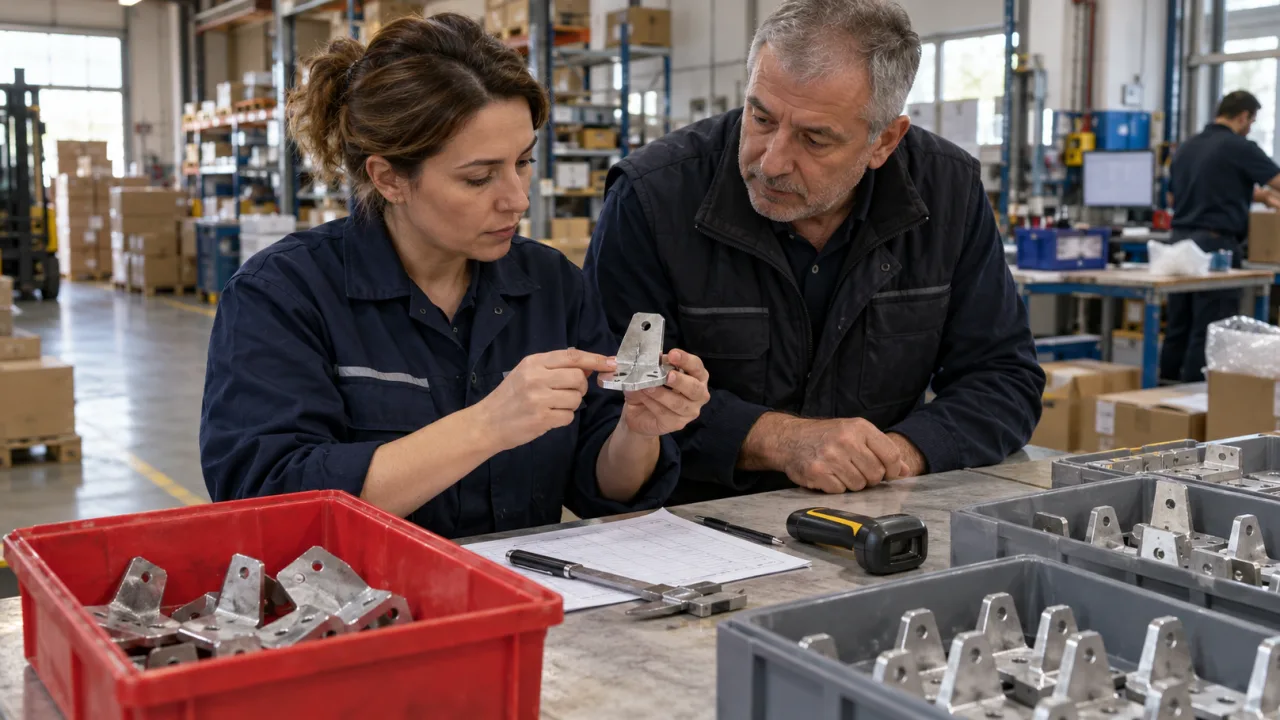
Noticing the faulty product does not mean that the wrong shipment has been prevented. Even if the product is set aside, if it appears free on the stock screen, another employee can reserve it for order. The purpose of non-conforming product tracking is to ensure that the physical product and the amount and usage decision in the system show the same situation.
The problem is often not to find the error, but to stop the flow of the product
Physical separation, stock blocking, lot or serial linking, and authorized release must work together. The product awaiting inspection may not be definitely faulty; However, it cannot be assumed that it is suitable for shipment until the acceptance decision is made.
What is a Nonconforming Product? How is it different from stock awaiting control?
A nonconforming product is a product that is determined to not meet a defined requirement. Measurement being out of tolerance, wrong material, incomplete processing, surface defect or difference from the customer-approved sample are examples of this. Evaluation is not based on personal taste; The specification must be based on the order condition or acceptance criterion.
The result of the product awaiting inspection is not yet clear. These two situations can be recorded separately, but neither should be used as free stock until the decision is completed. At what stages of production will controls be installed? guide to quality control points in production review; here we address the product flow after an error is found.
From Which Points Do Defective Products Enter Shipment?
Product is in the red box, inventory is still free
Possible cause: Physical separation has been made; but the same amount remained available in the system.
First response: Verify the relevant product, lot and quantity. Update availability along with physical location; Check available reservations and pickups.
There is a quality result, it does not belong to which parcel
Possible cause: The control record depends on the product code; The affected lot, batch or parcel distinction is missing.
First response: Hold the relevant amount until the suspicious scope is determined. Match the control result with the same tag and inventory movement.
They say the repair is finished, but no re‑check was performed
Possible cause: Completion of the transaction was used as a substitute for an acceptance decision that the product met the specification.
First response: Keep the repaired quantity in pending inspection status. Do not return to free stock without conclusion and authorized approval.
The product returned from the customer is directly on the sales shelf
Possible cause: Return acceptance and quality acceptance are considered the same process.
First response: Get the refund with separate registration and location. Contact the original shipment and make a usage decision after inspection.
Blockage in urgent order is removed manually
Possible cause: Due to shipping pressure, decision authority and exception registration are bypassed.
First response: Do not remove obstacles without justification, scope and authorized decision. Document necessary customer or technical approvals separately.
When the shift changes, the waiting product is forgotten
Possible cause: Responsible, final action and next decision time are not visible.
First response: Incorporate obvious nonconformances into shift turnover by quantity, location, responsible and expected decision.
A Quarantine Zone is Not the Same as a Stock Blockage
Quarantine is a location where product awaiting review or decision is separated in a controlled manner. Stock blocking is a system control that limits the use of a specified quantity in transactions such as reservation, production consumption, transfer or shipment. The presence of a separate shelf does not prove that the software automatically excludes this quantity.
The software used may work based on location, stock status or any other constraint. The important thing is the result: the pending quantity should not be allocated to the new shipment, the previously opened collection job should also take this change into account. If a job has started, how the status change is implemented depends on the system used; Open work may need to be stopped or rearranged in an authorized manner.
Even if the barcode reads the correct product code, it cannot prevent the wrong shipment if the quality judgment is missing. Ticket; must verify the product, lot or batch, quantity, location and non-conformance record together. To set up the registry chain party and lot tracking guide you can use
Example: There are 200 Units in the Warehouse, Shippable Quantity is 160
In this scenario designed to demonstrate the method, a manufacturer inspects 200 metal parts. All have been examined; 160 pieces were found suitable and accepted, 40 pieces were reserved due to surface defects. There are no other reservations or movements. Customer order is 180 units. If the scope of the error had not yet been determined, the scope of the suspicious batch should have been evaluated instead of only separating 40 items.
200 pieces
It is located in the warehouse; Not all of them are suitable for shipment.
160 pieces
In the first case, the amount that can be allocated to the order.
40 pieces
It cannot be shipped without decision and re-checking.
If the system only displays a total of 200 units and does not distinguish quality status, it is assumed that an order of 180 units can be met. However, in the first stage, there are 20 missing items. For the missing quantity, new production, another suitable batch or partial delivery option accepted by the customer will be evaluated; The blockage of 40 units is not lifted just to complete the order.
- Decision 1: Approved reprocessing decision is given for 30 of the 40 units, and scrap decision is given for 10 of them. Quantities are kept linked to the same nonconformance record.
- 2. Recheck: 30 items processed are checked with defined criteria. Completing the whole batch alone does not lift the block.
- 3. Release: All 30 are found suitable and authorized approval is recorded. Shippable quantity increases to 160 + 30 = 190 units; The output of 10 pieces of scrap is recorded.
- 4. Shipment: The current registration and physical product are verified and 180 units are sent. With 10 remaining available stocks and 10 scrap issues, the movement of the initial 200 units can be explained.
The result of this example cannot be applied to every party. If the reprocessed product does not meet the acceptance criteria, it is not added to the free quantity. Control method, scope and authority should be determined according to the risk of the product and customer conditions.
What Decisions Are Made Once Nonconformities Are Found?
The basic flow is as follows: record non-conformance → separate the suspicious quantity physically and systemically → decide on authorized use → apply the relevant action. Re-checking and authorized release of the repair or rework arm is required; Return and scrap arms are closed with documented stock issue.
Rework or repair
The action to be taken, the responsible person and the re-control criteria are recorded. When the process is completed, the product is not automatically considered suitable for shipment.
Return to supplier
The refund decision and document are matched with the affected amount. The location and shipping restriction are maintained until the product actually leaves the supplier.
scrap or destruction
Authorized decision and stock issue are recorded. The product is not left on the shelves just by changing the label; Financial recording and, if necessary, special destruction conditions are also carried out.
Conditional acceptance
It is evaluated only under permitted conditions and with the necessary technical and customer approvals. Usage limit, amount and decision are recorded; Safety and regulatory requirements cannot be ignored.
A warehouse employee can perform the physical segregation and movement recording; however, the decision on acceptance must be documented in writing. The authorities of quality, production and technical responsible persons should not be assumed interchangeable. If the product is found suitable again, it must be possible to see which quantity, with what result, by whom and when it was released.
Why Is Customer Return a Separate Initial Case?
Nonconformity in production begins with the work order and the relevant batch. For customer returns, the original order, shipment, return reason and, if possible, lot or serial information are required. Receiving the return does not mean that the product has been re-accepted in terms of quality.
Products whose packaging has been opened, whose usage history is unclear, or which have been damaged in transit await inspection. Amounts that can be sold, repaired, returned to the supplier or scrapped are allocated after the decision. Giving the customer a refund or credit is also not the same decision as releasing the physical product into stock.
How Do You Know When Registration Is Complete Before Shipment?
Nonconformity record; It must contain product code, lot or series, quantity and unit, location, error description, underlying criterion, responsible, decision, transaction result and approval information. Photography is helpful evidence; It does not replace the amount and decision record.
- Does the picking list only show the quantity that has been accepted and can be allocated to the order?
- Is the label of the checked lot or parcel the same as the product to be shipped?
- Have the reservation, collection and shipping documents opened before the blockage been re-checked?
- Does the release approval only cover the amount deemed appropriate?
- Can the balance, returns and scrap movements in quarantine be explained?
Missing record; urgent re‑check, second transfer, repackaging, return, and delivery delay can occur. When these costs are linked to a non‑compliance record, the impact on the business becomes more visible. Do not just correct the product in recurring errors; With the 5‑Why analysis guide Examine separately the reasons that produce the error and the reasons that prevent it from being shipped.
Frequently Asked Questions
Is it enough to place the defective product on a separate shelf?
No. If the system continues to show the same quantity as available, reservations or collections can be made. Physical location and transaction restriction must be verified together.
Can the repaired product be shipped immediately?
Repair registration alone is not sufficient. Defined recheck result and authorized release decision required.
If a sample is faulty, is only the sample separated?
Automatically no. The sampling plan, error type, and affected batch extent are evaluated. It may be wrong to isolate only the sample and accept the rest as appropriate.
Does the barcode system completely prevent misshipping?
Barcode helps with authentication. This alone is not enough if there is incorrect status, missing lot linking or unauthorized unblocking.
Being in stock is different from being available for use.
Microsoft's quality and nonconformance management, stock status and stock blockage Documents provide examples of the distinction between control record, quantity and usage restriction. This article presents a problem analysis that can be adapted to business; The screens or operation of the said system should not be assumed to exist in the same way in Korgün products.
Korgün Cloud ERP covers the scope of production order and product records. production tracking program You can review it on the page. Also verify your business instance during the demo for quarantine, open collection stoppage, and release authorizations.
See together which product is waiting and why
Evaluate control points between production, warehouse and shipping with a real example of non-conformance. Clarify in the needs analysis which record should stop which operation.