
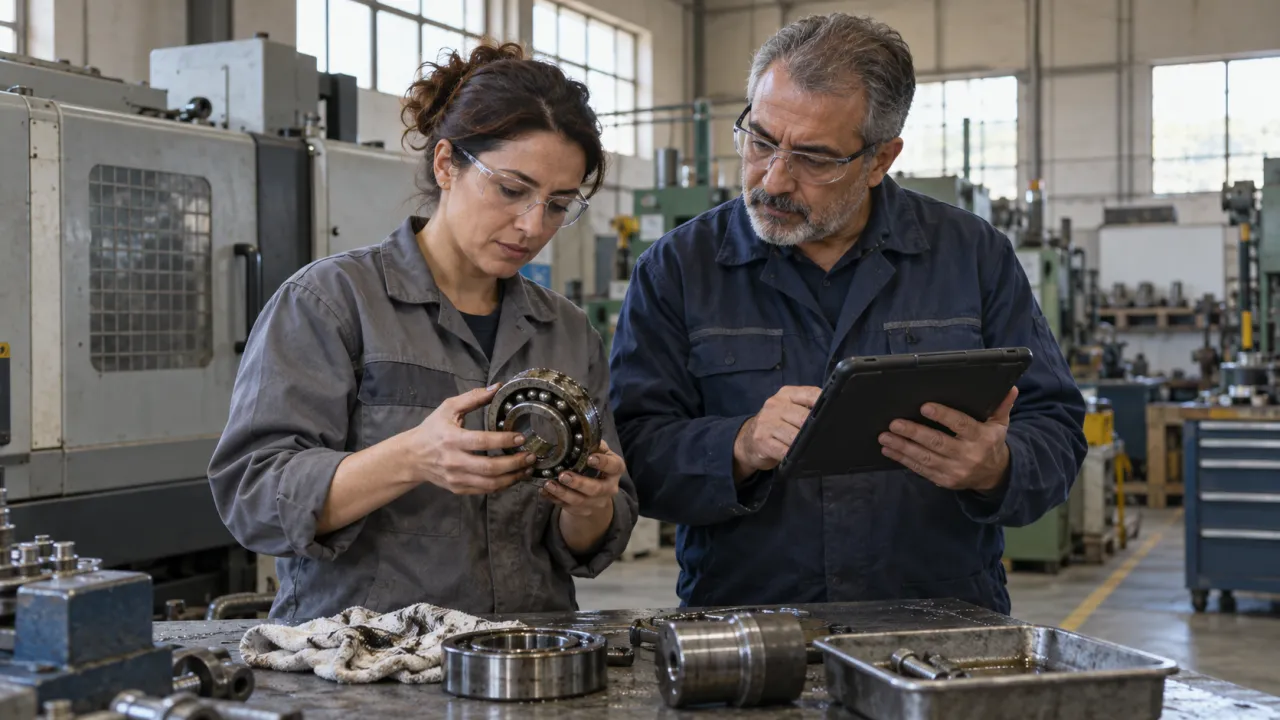
A machine returns from maintenance and production restarts, but the same alarm or noise comes back a few shifts later. The first question should not be whether the replacement part has failed again, but whether the conditions behind the original failure were actually removed. Replacing a part, eliminating a cause and verifying the result are three separate tasks.
The same symptom does not always mean the same cause
“The motor runs hot” or “the bearing is noisy” describes an observation, not a root cause. Lubrication, contamination, alignment, mounting and operating load can produce similar symptoms. Do not copy the previous cause code without comparing the machine, component position, product, load and running time for each event.
Symptom
The alarm, noise, vibration or production issue observed by the operator, recorded with its timing and operating conditions.
Verified cause
An explanation supported by technical inspection and evidence. Suspected and verified causes must not be treated as the same status.
For a method that separates assumptions from evidence, read the 5 Whys analysis guide.
Which records should you compare when a fault returns?
“Maintenance completed” is not enough
Record the replacement part code, work performed and inspection points. Link the work order, removed part and technical findings to the same event.
The part changed, the load did not
Compare the product, shift, running time and load before each failure. Do not change machine capacity or settings based on this article.
The right part may still be applied incorrectly
Qualified personnel should compare part suitability, mounting and lubrication records with manufacturer requirements. Installing a new part is not verification by itself.
It ran unloaded but was not checked in production
Record the safe test conditions and who authorised return to production. The follow-up period and acceptance criteria should be appropriate for the equipment.
Example: the bearing was replaced, but the noise returned
This example illustrates the method. It is not a customer case study or a remote diagnosis.
First event: noise recorded, conditions missing
A bearing was replaced after noise was reported on machine M-07. The record only says “replaced, running”; the product and load used for testing were not recorded.
Recurrence: link the new event to the earlier work order
The noise was reported again three shifts later. The same component position and similar operating conditions were noted, and the previous work order was linked. This does not prove an identical root cause.
Investigation: what else changed?
The authorised team examines the removed part and records of mounting, lubrication, contamination and operating conditions. Possible causes are rejected or confirmed using evidence; noise alone does not establish a diagnosis.
Closure: record the result as well as the work
Record the corrective action, safe verification result and owner of the follow-up check. Keep the status as “under observation” while monitoring continues. Reassess the record if new evidence appears.
To distinguish waiting time, repair time and return to production, use the unplanned downtime tracking guide.
Six checks before closing a maintenance work order
These checkboxes are for personal review only. Selections are not saved and do not create a work order or maintenance approval.
Owner: maintenance team leader. Verification: the test result recorded by the authorised team. Next check: an operating-hour checkpoint or date appropriate for the machine. Closure decision: after reviewing both findings and follow-up results.
Review maintenance records alongside production planning
A recurring failure is not just a maintenance-team issue. Production needs the lost time, the warehouse needs the parts used, and maintenance needs the technical findings, all linked to the same event. Actual running hours matter alongside calendar time between failures; a long interval on a lightly used machine does not prove improvement.
For the broader maintenance approach, read the planned and proactive maintenance article. To explore connected production, inventory and accounting records, see Korgün Cloud ERP. For the production scope, see the production tracking software page.
If you need dedicated maintenance work orders, machine connectivity or automatic failure prediction, verify the scope during a needs assessment. This article does not imply that these features are included in a standard product package.
Frequently asked questions
Does a repeat part failure prove that maintenance was performed incorrectly?
Not by itself. Part suitability, mounting, environment and operating conditions need to be reviewed together. Compare event records instead of blaming a person or supplier without evidence.
How many days should follow-up last after maintenance?
There is no single period suitable for every machine. Checkpoints and criteria depend on equipment risk, manufacturer instructions, operating conditions and technical assessment.
Can the maintenance work order be closed once the machine runs?
Running alone is not sufficient evidence. Work performed, safe verification, return-to-production approval and any required follow-up should be completed under the site’s procedure.
Where should we start when tracking recurring failures?
Use consistent identifiers for machines and component positions. Link new events to earlier work orders and consistently record symptoms, operating conditions, work performed, verification and the responsible person.