
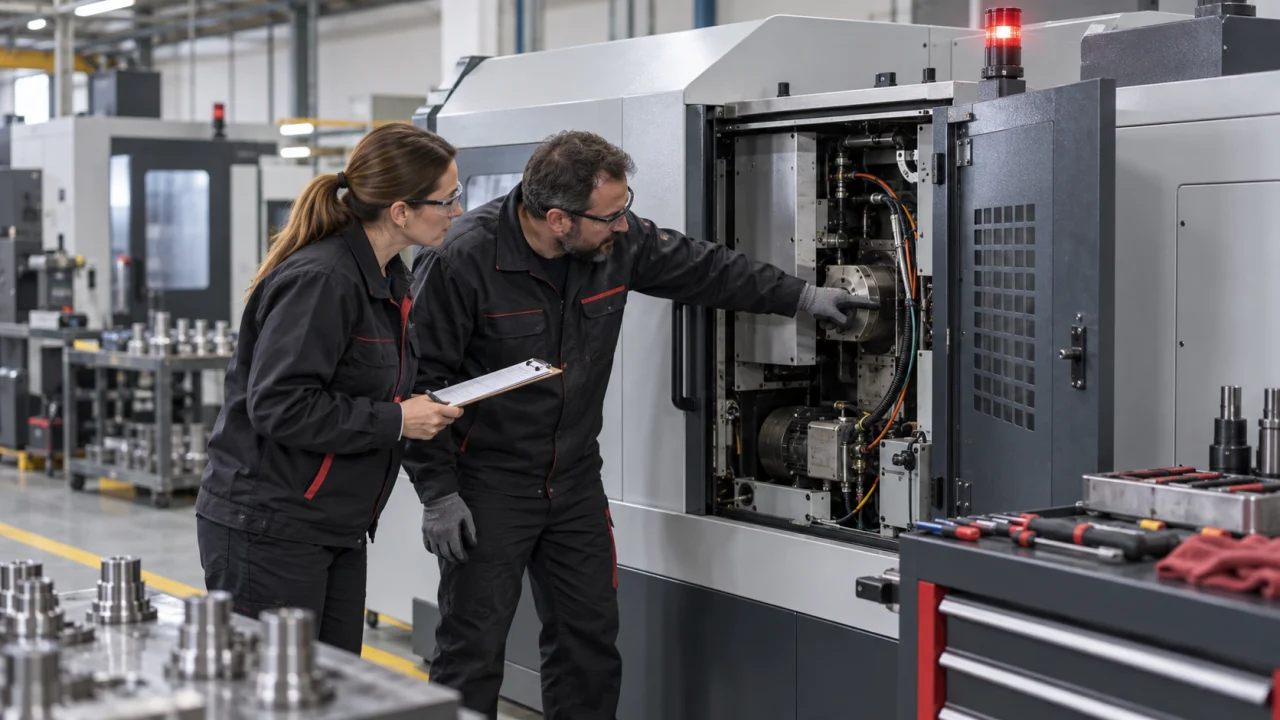
Unplanned downtime is when production is unexpectedly stopped for a reason not scheduled in the program. Although machine failure is the most common cause, material waiting, quality approval, lack of personnel and wrong working method can also stop the line. The first requirement to reduce lost time is to make each event visible with accurate onset and cause information.
Planned Stopping and Unplanned Stopping Are Not the Same Loss
Its place and purpose are clear in the calendar.
Periodic maintenance, cleaning, mold replacement or planned facility work are added to the production schedule in advance. Its duration is taken into account from the beginning in the capacity calculation.
Occurs while production is ongoing
An unexpected event disrupts the plan, keeps the operator and other resources waiting, and puts the delivery date and production quantity at risk.
What Information Should Be in the Unplanned Stop Record?
Beginning and ending
The moment the stoppage starts, the notification time, the start of intervention and the first hour of a good product.
Source record
Machine, work center, shift, production order, product and operation information.
reason code
Subcause verified by machine, material, quality, personnel or method main group.
Performed operation
Temporary intervention, part replacement, adjustment, material completion or quality decision.
Those responsible
People who report downtime, intervene, restart and confirm production.
Production result
Result of lost time, estimated quantity not produced, wastage and rework.
If the downtime record is left independent of the production order, it cannot be determined which product, order and operation is affected. How to associate the job with the production record in the production order guide and review it.
How to Track a Stoppage Event?
Home
The actual time the machine or line stops producing is recorded.
notification
The operator transmits the stance information to the correct team and responsible person without delay, without stating the reason.
Intervention
The maintenance, quality, warehouse or production team verifies the problem and records the action taken.
reproduction
The end of the downtime is considered to be the moment when the first solid product is approved, not the operation of the machine.
Machine Running Does Not Count as Production Started
The stance has begun
A pressure warning occurred on the CNC machine and the operation stopped.
Maintenance reported
The operator opened a fault report with machine and production order information.
intervened
The maintenance team checked the pressure valve and replaced the faulty part.
First good product approved
The total production loss was covered as 39 minutes.
In this example, although the repair finished at 10.46, production returned at 10.53 when the first solid product was approved. Not recording the testing and quality time in between makes the actual lost time seem shorter than it is.
How Are Unplanned Downtime Reasons Classified?
machine
Failure, sensor error, tool breakage, power or auxiliary facility outage.
Material
Lack of raw materials, wrong material, warehouse waiting or faulty feeding.
Quality
First part approval, measurement waiting, non-conformance decision or re-checking.
Staff
Lack of competent operators, shift turnover, training or task uncertainty.
Method
Missing instructions, wrong order of settings, long preparation or non‑standard operation.
Cause Code is Not the Same as Root Cause
“Machine failure” indicates which group the event is in; It does not explain why the fault reoccurs. Accurate event data must be collected first, then root cause analysis must be performed for recurring or long-lasting losses. Application steps In the 5 Whys Analysis guide and review it.
How to Reduce Lost Time in Production?
Make the posture instantly visible
The operator should be able to report a stoppage with a single button or a short record; batch entry at shift end should not be expected.
Set notification order
Who will be notified in case of malfunction, quality and material incidents and within what time period should be defined in advance.
Why keep your codes simple
Instead of very long lists, create main groups and verifiable sub-reasons that teams use in the same sense.
Track intervention time separately
Waiting for notification, team arrival time, repair and production approval should be separated.
Verify the first intact product
Restarting the machine does not mean that the downtime is over; The time until quality approval is included in the record.
Address recurring causes
Choose the events that lead to the most frequent or longest loss; Do not just replace the part without verifying the root cause.
Downtime alone does not explain the overall performance of the machine. In cases where usability, speed and quality losses must be evaluated together machine efficiency guide apply. To understand whether the posture limits the overall flow of the line Bottleneck analysis guide in production Check it out. OEE and bottleneck calculations are not repeated in this article.
Common Mistakes in Posture Tracking
Writing every stance as a “malfunction”
Losses arising from materials, quality and methods are the responsibility of the maintenance team; The real problem is invisible.
Enter the posture at the end of the shift
Start, notification and response times become estimates; duration analysis loses its reliability.
Turn off recording when the machine starts
During setup, testing, and initial solid product approval, production may still not have returned.
Just look at the total minutes
The solution method for ten short stances and one long stance is different; Frequency and duration should be evaluated together.
When evaluating the monetary impact of the shutdown, it is necessary to take into account not only the lost minutes, but also the available production hours and machine costs. Cost structure in the machine hour cost guide You can review it separately.
Frequently Asked Questions
Should short downtimes also be recorded?
Yes. Short stops that seem unimportant on their own can cause loss of most of the shift when repeated frequently. The recording method should be fast enough not to tire the operator.
Does waiting for materials count as machine failure?
No. Even if the machine is operational, if production is stopped due to material, the event should be recorded in the material main group.
When should the stop be closed?
It should be closed not when the technical intervention is over, but when production has safely restarted and the first intact product has been verified.
Does planned maintenance completely eliminate unplanned downtime?
No. Planned maintenance reduces risk; Material, quality, method and unexpected malfunctions may still occur. Maintenance approach in the proactive maintenance guide and review it.
To interpret the effect of posture on production efficiency in the OEE calculation guide Examine the availability distinction; Also record the reasons for the stoppage.
Track production losses with causes and response times
Analyze machine downtimes with production orders, operations, maintenance interventions and actual results. KG Palaimon Check out how you can relate it on .