
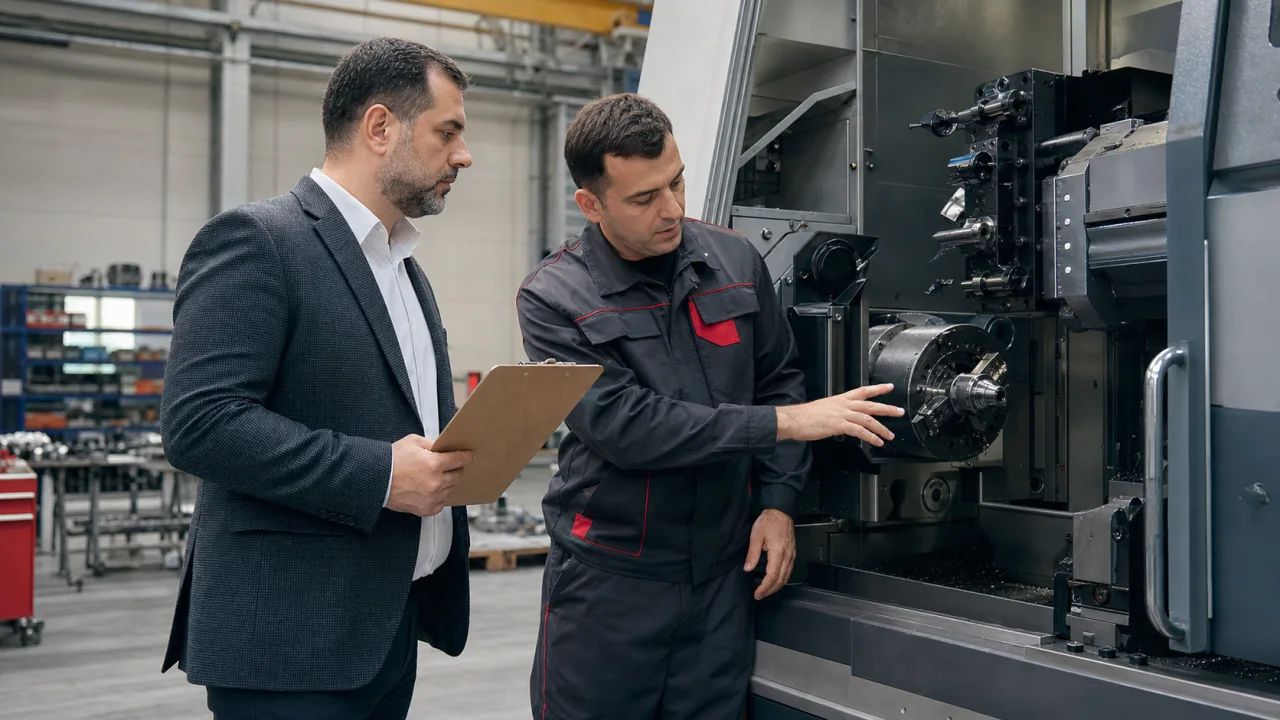
Investment in new machinery is not because production seems intensive; It should be done because it is not possible to meet the verified demand with the available resources. If unplanned downtime, long preparation, missing materials or low performance cause loss of capacity, the new machine may aggravate the same problem in a more expensive way.
Verify Investment Need with Data First
How much capacity gap is there?
Calculate based on usable capacity, not theory.
What is the real reason for the deficit?
Separate machine, material, human, method and quality losses.
What is the lowest risk solution?
Compare the new machine to other capacity options.
To establish the capacity gap correctly, first production capacity calculation guide use it.
15-Point Pre-Purchase Checklist
Evaluate the items one by one with the investment team. The issue that remains unclear should be transformed into a task with a responsible person and a completion date before the purchase order.
Need and capacity
Product and process compatibility
Facility and human resources
Maintenance and data connection
Cost and investment decision
Machine Price Is Not the Full Cost of Investment
Purchasing
Machinery, options, molds, tooling and measuring equipment
Installation
Transportation, crane, floor, energy, and commissioning
Usage
Operator, energy, consumables, maintenance and spare parts
Financing
Credit, exchange rate risk, insurance and cost of capital
To see the actual hourly usage cost machine hour cost calculation guide; To evaluate the investment support scope separately investment incentive certificate guide and examine it.
To evaluate existing work orders and production data before a machine investment production tracking program You can review the scope on the page.
Investment or Process Improvement First?
New machinery investment becomes stronger
- If the demand and capacity gap is permanent
- If the bottleneck is verified on the machine
- If people, space and infrastructure are ready
- Total cost and return if acceptable
The process must be improved first
- If the machine remains idle or faulty for a long time
- If preparation and mold change are long
- If material and quality expectations are high
- If available shift capacity is not used
Actual working losses in the machine efficiency guide evaluate.
Frequently Asked Questions
How many years should the payback period be for machine investment?
There is no single correct duration. Product life span, demand reliability, financing cost, technological obsolescence and company's investment criteria should be evaluated together.
Can I buy a second-hand machine?
If technical status, precision, maintenance history, spare parts, safety, energy consumption and data connection can be controlled independently, it may be an option.
Should additional shifts be tried first for capacity increase?
If demand is temporary or existing machinery is underutilized, an additional shift may provide a lower-risk trial. Labor and quality impact should be measured separately.
How does ERP help in machinery investment decision?
It makes the source of the capacity gap visible by associating order load, actual cycle, downtime, wastage, maintenance and cost data with the same work order.
Evaluate machine, work order, downtime and cost data together
Before investing in capacity, see how you can monitor the real bottleneck in your production processes with Korgün ERP.